
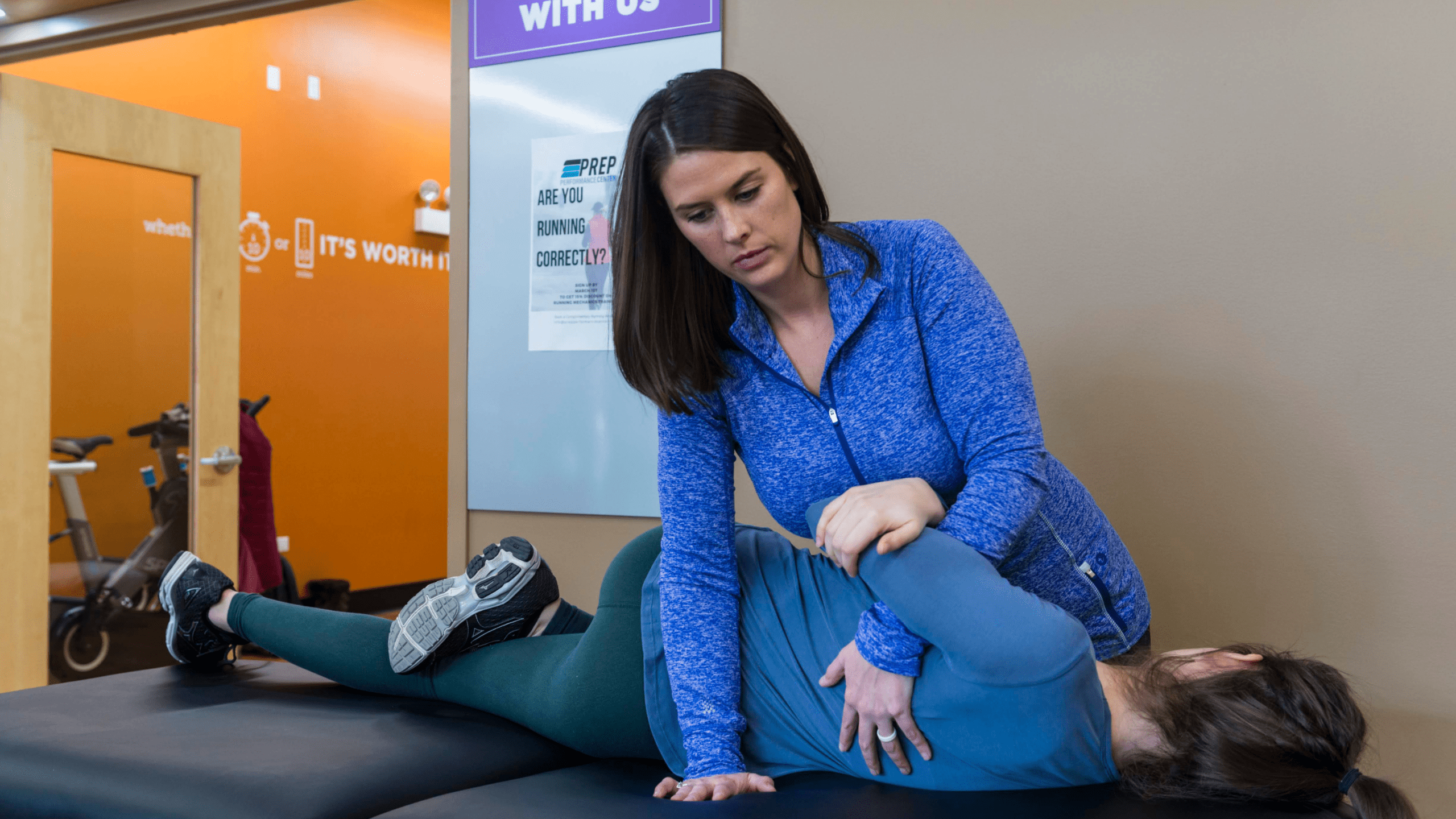
If you’ve ever felt that sharp “twinge” while reaching for a bag of groceries or a dull ache after a long day at your desk, you aren’t alone. Low back pain (LBP) affects nearly 80% of adults at some point. But as a Doctor of Physical Therapy and a former athlete, I want to change how we talk about it.
Too often, back pain is treated as a “broken part” that needs rest. At PREP Performance Center, we view it differently: your back isn’t broken; it’s likely overloaded or under-supported.
The Myths We Need to Retire
Before we talk about healing, we have to clear the air. Misinformation is often the biggest barrier to recovery.
-
Myth #1: Bed rest is the best cure. * The Reality: Movement is medicine. Extended bed rest actually weakens your core and stiffens your joints. Controlled, specific movement is what “lubricates” the spine.
-
Myth #2: My MRI shows a “bulge,” so I’m stuck with pain.
-
The Reality: Many people with zero pain have disc bulges on their MRIs. We treat the human, not the image. Your movement patterns matter more than a picture.
-
-
Myth #3: “I just have a bad back.”
-
The Reality: Your back is one of the strongest structures in your body. Usually, the “bad back” is actually a result of muscle imbalances in the hips or poor recruitment of the core.
-
The ARSI Approach: Why Your Back Pain Might Be a Hip Problem
In my clinical practice, I utilize the ARSI Movement System. We don’t just look at where it hurts; we look at why it hurts. The lumbar spine is a bridge between your hips and your upper back. If your hips are stiff or your mid-back (thoracic spine) doesn’t rotate, your lower back has to pick up the slack.
Our methodology focuses on four pillars:
-
Assessment of Muscle Imbalances: Are your glutes “firing”? Is one side of your pelvis hiking higher than the other?
-
Recruitment: Teaching your brain to use the deep core muscles (like the transversus abdominis) before you lift or move.
-
Stabilization: Creating a “stiffness” where you need it to protect the spine.
-
Mechanical Loading: Moving through sport-specific or life-specific activities with the right form.
Three “Pro-Level” Tips for Daily Relief
You don’t have to be a collegiate athlete to train like one. Here are three things you can do today:
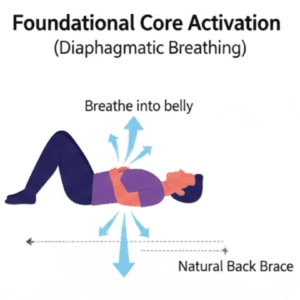
1. The “Foundational” Core Activation
Instead of sit-ups (which can sometimes irritate the back), try Diaphragmatic Breathing.
-
How: Lay on your back, knees bent. Breathe into your belly so it rises, then as you exhale, gently “knit” your ribs together and feel your lower abs tighten. This is your natural back brace.
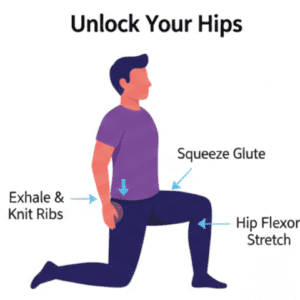
2. Unlock Your Hips
Stiff hips are the #1 contributor to LBP. If your hips don’t move, your back will.
-
Try: A half-kneeling hip flexor stretch. Keep your tall posture and squeeze your glute on the kneeling side.

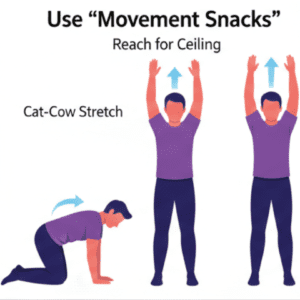
3. Use “Movement Snacks”
If you sit at a desk, your spine is under constant static load. Every 30 minutes, perform a “Cat-Cow” stretch or simply stand up and reach for the ceiling.
When Should You See a Specialist?
While most back pain resolves with the right movement, you should seek a professional evaluation if:
-
Pain radiates down your leg (sciatica).
-
You feel numbness or tingling in your feet.
-
The pain is worse at night or prevents you from exercise.
-
You’ve been “dealing with it” for more than two weeks.
Final Thoughts
Your body is designed to move, jump, and lift. At PREP, our goal isn’t just to get you “pain-free”—it’s to make you resilient. Whether you’re a “weekend warrior” or an elite athlete, your back deserves a proactive strategy, not a reactive one.
Ready to get back in the game? Stop managing the pain and start mastering your movement.