
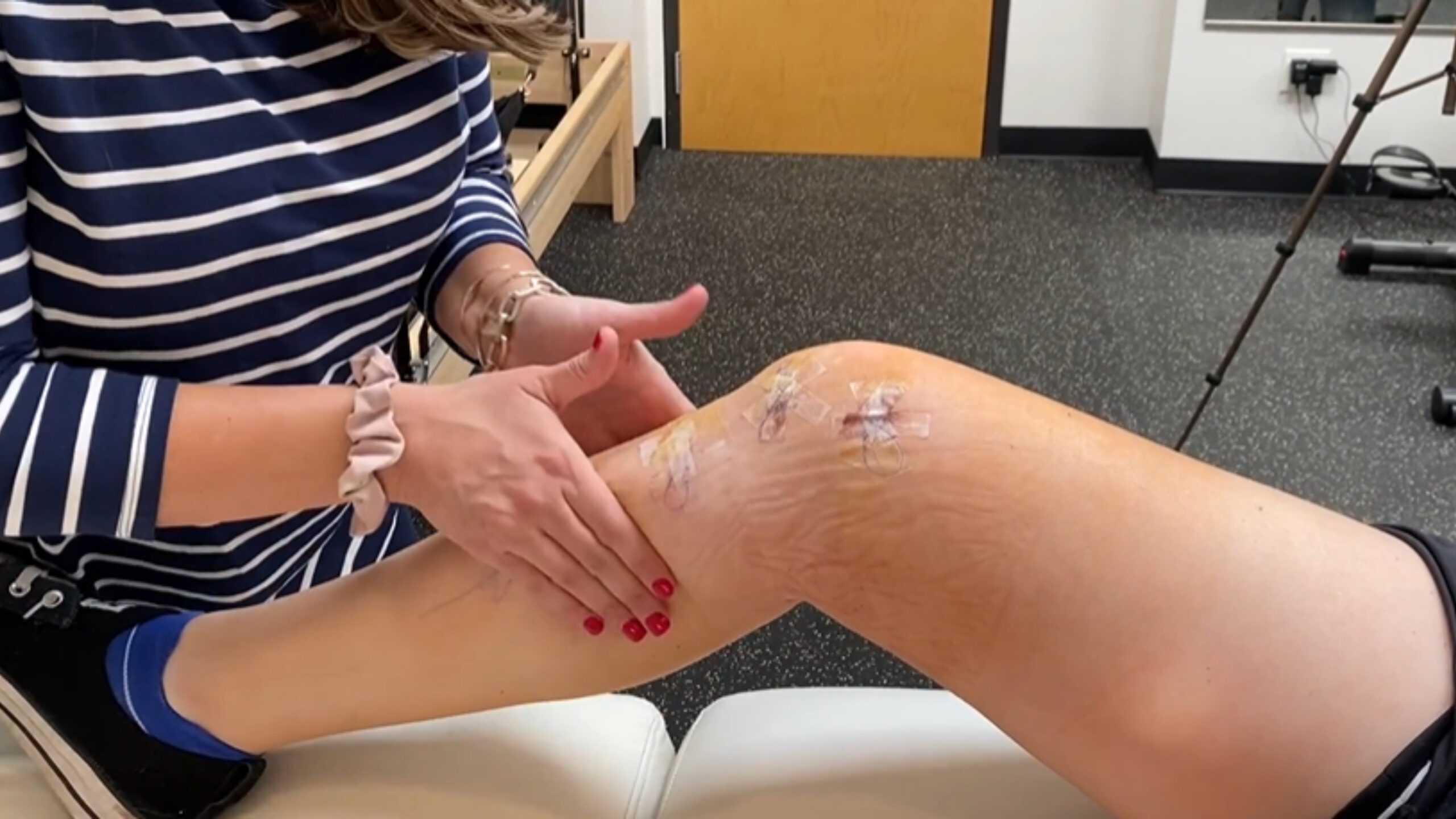
An ACL injury changes everything—but how you handle the first phase of rehab can determine how strong, confident, and successful your return truly is.
Phase 1 ACL rehabilitation is not about pushing harder or doing more exercises. It’s about restoring the fundamentals: knee motion, swelling control, and quadriceps activation. Get these right, and every phase that follows becomes smoother. Skip or rush them, and setbacks become far more likely.
At PREP Performance Center, we see it every day. Athletes who respect Phase 1 recover faster, move better, and return to sport with confidence—not hesitation.
What Is Phase 1 ACL Rehab?
Phase 1, often called Early Recovery or Foundational Strength, focuses on preparing your knee and nervous system for everything that comes next.
The primary goals are simple but critical:
- Restore full knee extension and safe flexion
- Reduce swelling and inflammation
- Re-establish strong quadriceps activation
- Normalize early walking and weight bearing
- Prevent compensations that lead to future problems
This phase lays the groundwork for strength training, running, jumping, and return-to-sport progressions later on.
The Most Common Phase 1 Mistake
The biggest mistake people make in Phase 1 ACL rehab is doing too much, too soon.
More exercises do not equal better results. What matters is:
- Quality of movement
- Full control
- Consistency
- Respecting tissue healing timelines
Phase 1 success isn’t flashy—but it’s non-negotiable.
The Top Phase 1 ACL Rehab Exercises We Rely On
Below are 20 proven Phase 1 ACL rehab exercises we regularly use to restore motion, reduce swelling, and rebuild quad control safely.
Core Phase 1 Exercises
- Quad Sets
- Heel Slides
- Straight Leg Raises
- Knee Extension Stretch (Heel Prop or Towel Under Ankle)
- Ankle Pumps
- Short Arc Quads
- Weight Shifts
- Hamstring Sets
- Glute Bridges
- Standing Terminal Knee Extension
These exercises target quad activation, knee motion, circulation, and early functional control.
Additional Phase 1 Support Exercises
- Patellar Mobilizations
- Passive Knee Extension Holds
- Seated Assisted Knee Flexion
- Quad Sets with Towel Roll Under Knee
- Double-Leg Weight Acceptance
- Marching in Place (Supported)
- Double-Leg Calf Raises
- SideLying Hip Abduction
- Sit-to-Stand from a High Surface
- Heel-to-Toe Gait Drills
Together, these movements reinforce proper mechanics, prevent stiffness, and build confidence during early recovery.
Why Phase 1 Mastery Matters More Than You Think
Phase 1 determines:
- How well your quadriceps fire later
- How smoothly you regain walking and running
- How confident you feel loading your knee
- How prepared your body is for higher-impact training
Skipping steps here often leads to lingering swelling, poor movement patterns, and delayed return to sport.
How to Know You’re Ready to Progress
Progression through ACL rehab should always be criteria-based, not time-based.
Key Phase 1 milestones include:
- Minimal swelling and pain
- Full knee extension
- Controlled knee flexion
- Strong, voluntary quad activation
- Confident walking mechanics
Meeting these criteria allows you to move forward safely into strength and neuromuscular training.
Want a Clear, Follow-Along Plan?
We created a free ACL Rehabilitation Progression Checklist PDF to give you clarity, structure, and confidence during recovery.
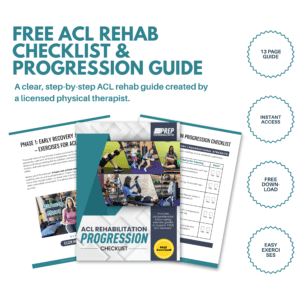
Inside the Free Download, You’ll Get:
- Simple, follow-along Phase 1 exercise guides
- Clear progression criteria from Phase 1 through Phase 5
- Easy checkboxes to track your recovery
- A structured roadmap so you always know what to focus on next
No guesswork. No confusion. Just a clear path forward.
This guide is designed for patients who want to understand their rehab, stay motivated, and take an active role in their recovery—while still working alongside their physical therapist.
Final Thought
ACL rehab is a journey—and Phase 1 is where that journey truly begins. When you slow down, focus on the fundamentals, and follow a structured plan, you give yourself the best chance to return stronger, safer, and more confident than ever.
At PREP Performance Center, this is the same system we use every day with athletes and active adults—and we’re excited to share it with you.
Your comeback starts here.